


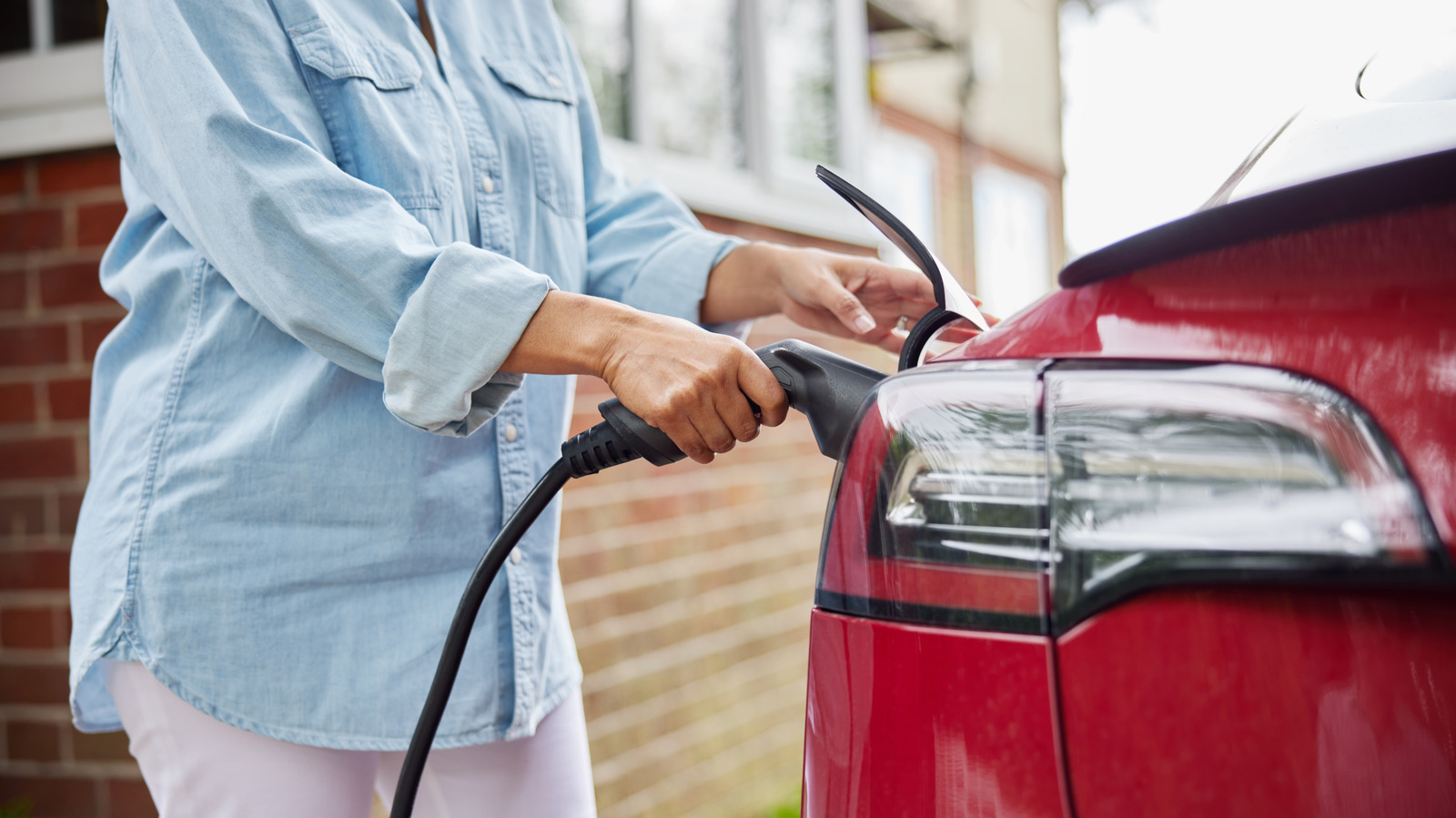
Provided you don’t drive long distances every day, Level 1 charging could be all you need.
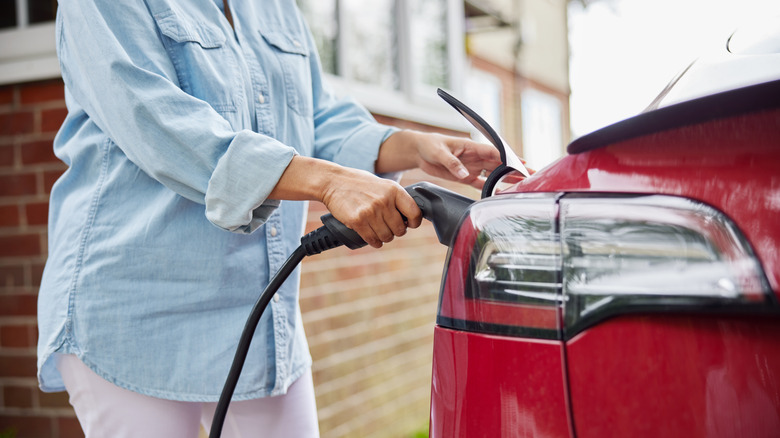
If you’re a new electric vehicle owner, you may be surprised to learn just how many charging options you have available, both at home and to extend your range on the road. While the industry has standardized terms like Level 1, Level 2 and Level 3 charging, those labels offer little information on their own. Installing a Level 2 charger can also cost hundreds of dollars, so is it an expense worth taking on?
A Level 1 charger can take more than 40 hours to fully charge up an EV’s battery, while a Level 3 charger can add hundreds of miles to your car’s range within a single hour. While you may think faster is always better, we also have to account for tradeoffs like cost and battery longevity. So which charging level should you use? The answer depends entirely on where you plan to charge your car, how far you drive and the cost of electricity in your region.
Level 1 vs. Level 2 vs. Level 3 charging: What’s the difference?
A Level 1 EV charger simply uses the standard 120-volt household outlet in North America, which limits it to about 1.4kW of charging power. Level 2 chargers use 240-volt circuits, typically at higher currents, allowing them to deliver substantially more power. How much more depends on the charger and circuit: A 40-amp Level 2 charger (on a 50-amp circuit) can deliver as much as 9.6kW of power. Level 2 chargers all the way up to 80A exist too, delivering up to 19.2kW, provided your home’s electrical service can support it.
Level 1 and Level 2 chargers supply the grid’s alternating current (AC) to the EV. The vehicle’s onboard charger converts this supply to direct current (DC) before it reaches the battery. Converting AC to DC isn’t 100-percent efficient, so it generates heat, and onboard chargers only work up to a certain power limit. With Level 3 charging, the AC-to-DC conversion takes place before it reaches the car, bypassing the onboard charger and delivering high-voltage power directly to the car’s battery.
This lets Level 3 chargers dial things up a notch, typically pushing anywhere from 50kW to 500kW of power. It’s important to note that charging speeds drop as the battery gets more full, so no EV will be charging at their absolute peak rate for very long. Regardless, Level 3 chargers can be enough to fully recharge a depleted EV battery in an hour or two. That’s especially true for newer vehicle models that support the highest power levels. The Lucid Gravity, for instance, can charge at up 400kW if you can find a Level 3 charger that supports that rate. Meanwhile, the Tesla Model Y’s maximum charging power ranges from 175kW to 250kW, depending on the model.
Level 1 vs. Level 2: Which EV charger do you need at home?
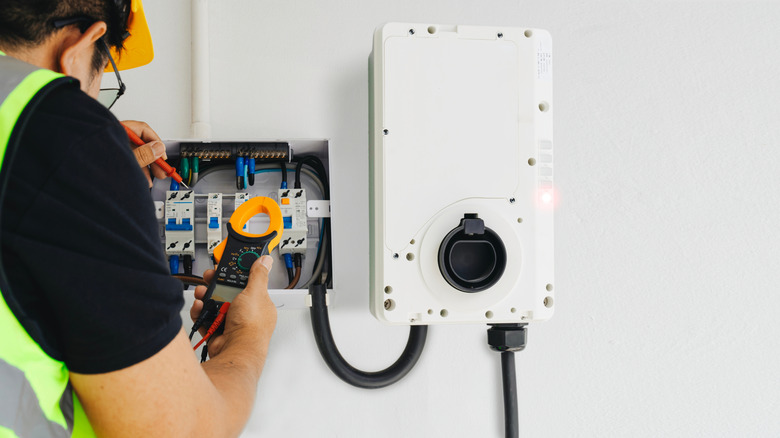
If you only drive a few miles a day, a Level 1 charger is all you need. There’s little reason to shell out hundreds of dollars for a Level 2 charger and an electrical upgrade when your EV’s battery can simply charge overnight. If you’re on a time-of-use plan with your energy provider, you can schedule charging during off-peak hours and still gain plenty of range through Level 1 charging for your commute the next day.
While the exact figure depends on your vehicle’s efficiency, the US Environmental Protection Agency (EPA) estimates Level 1 charging adds about 5 miles of range per hour. So even with a conservative 8 hours of charging time, you stand to gain roughly 40 miles of range.
Level 2 chargers make a lot more sense when you frequently drive longer distances during the week. You can still take advantage of off-peak electricity rates, but with a 40A charger can add over 30 miles of range per hour. This all but eliminates range anxiety since you can easily add hundreds of miles in a single overnight charge session.
If you’re on the fence about installing a Level 2 charger, consider that you may also be able to charge all day on the weekends. Some time-of-use plans offer lower or off-peak rates over the weekends, allowing even a Level 1 charger to add significant mileage if plugged in for a full day. This can make Level 1 chargers a perfectly viable option if your car sits parked for most of the weekend. And if you’re ever in a pinch, you can simply use a public Level 2 or Level 3 charger.
On the flip side, some EV batteries require warming up in the winter, so a Level 1 charger may struggle to both heat up and deliver power to the battery simultaneously. Cold weather also reduces an EV’s effective range, so an unheated garage can make Level 2 chargers the more sensible option.
When should you use Level 3 chargers?
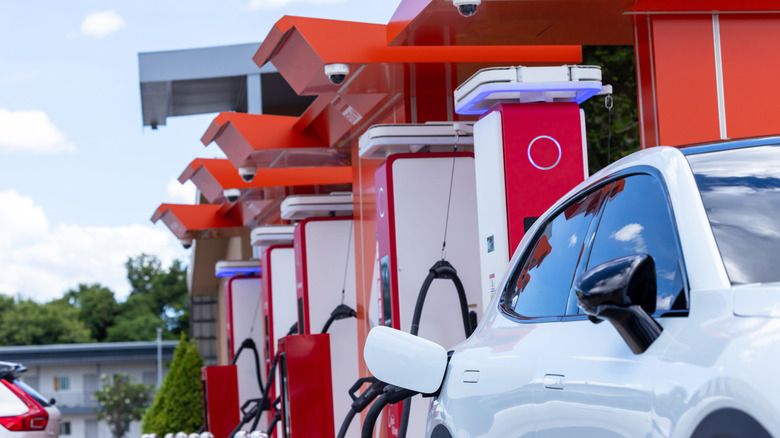
Level 3 chargers are the fastest option to charge your EV’s battery, but they’re uncommon in residential settings. This is because they require a much more substantial electrical connection, and installing one in your home would almost certainly entail a significant electrical service upgrade. You’ll typically find Level 3 chargers in commercial settings like parking lots or highway rest stops.
Level 3 chargers can add over a hundred miles of range within a single hour, making them ideal for road trips and quick top-ups. Having said that, the maximum power varies considerably between DC fast chargers so one Level 3 charger might be significantly faster than another.
The downsides to Level 3 chargers are cost and, potentially, battery longevity. While the jury is still out on the impact of faster charging on long-term battery health, sticking to Level 2 charging will alleviate that concern. The upside is obvious: Public Level 3 chargers offer the closest analog to the fill-up-and-go experience of a gas-powered car.
When looking at public chargers, you’ll need to pay attention to the physical connector. North America is currently transitioning from older J1772 and CCS connectors toward NACS, which you may recognize as the plug historically used by Tesla vehicles. NACS has now become the standard for EV charging in North America and will ship on most new electric cars in the coming years.
If your car requires NACS and a public charger only offers the CCS connector, you won’t be able to plug in at that location without an adapter. Some charging stations offer multiple connectors to choose from, but this isn’t always the case.
The CCS/NACS issue should solve itself over time, but for now I’d recommend using an app like PlugShare or ChargePoint to find out which connectors are available at a particular location. These apps also report whether a location offers Level 2 or Level 3 charging, allowing you to find the fastest station when in a hurry.
Read the original article here