



Critic’s Rating: 4 / 5.0
4
Colonialism rarely announces itself as such. It begins as exploration, then quietly hardens into ownership, control, and exploitation.
That’s exactly where Apple TV’s longest-running sci-fi finds itself in the For All Mankind Season 5 premiere.
“First Light” frames Mars not as humanity’s greatest achievement, but as its most familiar mistake — a new world already caught in an old fight over who gets to claim it.

Mars is no longer an outpost. It’s a thriving colony, sprawling far beyond the early days of Happy Valley, with its own systems, culture, and identity. And that evolution has created a fracture that feels impossible to mend.
Mars and Earth remain farther apart than ever, even though their physical distance has been significantly reduced.
Martians are ready for autonomy, but Earth says, “No.”
Who Owns Mars?

In the aftermath of the Goldilocks heist, Earth and Mars are locked in mutual dependence — and mutual resentment.
Each side believes it’s being used. Neither sees a way out.
“First Light” leans into that tension without forcing it, letting the politics simmer just beneath the surface. But the outcome is obvious: war.
It’s the quiet chaos brought by the presence of peacekeepers, or the divisive rhetoric being espoused so openly on Earth.
Despite being home for many, Mars is still treated like a resource. People with whole lives here must eventually return to Earth because Mars is being exploited rather than invested in.
Those who can leave for Earth are the lucky ones.

Alex Poletov Baldwin is Mars to the core. This has been his home, and he is the only person here who knows nothing except for this planet. He’s the closest thing the show has to a true Martian.
And still, Earth pulls at him.
He has never set foot on the planet, but he desires to experience the nice things people on Earth take for granted, like dipping his feet in ocean water.
That contradiction sits badly with him as he feels trapped on this planet.
Leaving it would most likely kill him, but staying on it is killing him, too.

The arising Mars-Earth conflict puts Alex in a very peculiar position because he has reasons to root for both sides, but realistically, he can only side with one: Mars.
My heart breaks for him when he sees his friends graduate and go to Earth while he’s stuck at home watching VR videos.
For All Mankind’s focus on Alex reframes the story not just as a story of discovery but also of survival.
And the impending conflict of autonomy and control has more stakes for him than anyone could fathom.

The Next Huge Step for Mankind
The stakes for Martian pioneers feel high, but they always face bigger ambitions.
For All Mankind has always been about major discoveries, and even though the previous season had faltered in that part, this season is an opportunity to try again.
The scientific problem this time around is the biggest unanswered question to date: Is there life outside Earth?
It’s the kind of question that justifies everything the show has been building toward.
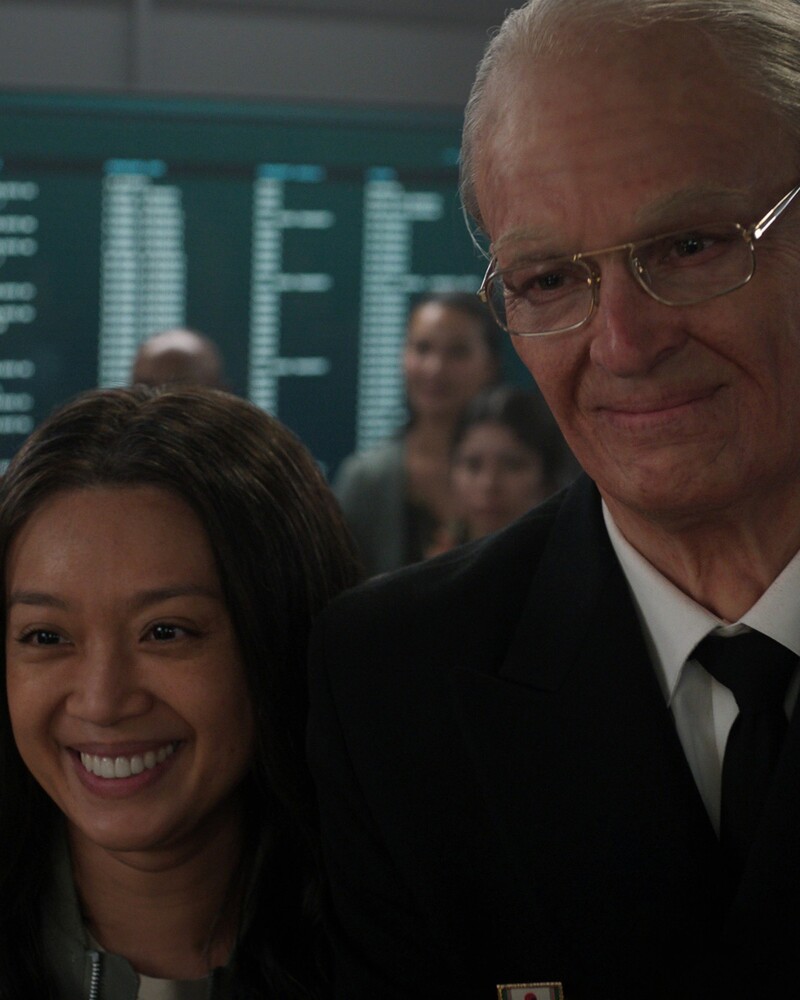
Kelly and Aleida are at the forefront of this exploration, but the results have been soul-crushing. Years have given way to a decade of nothing, which is not something to be taken lightly.
Most people — myself included — would have quit by year two, at the latest by year four.
Yet Kelly remains hopeful, even with dwindling resources and energy.
Seeing her defeat ups the emotional investment in seeing this scientific endeavour succeed, and if she does, it will be the most satisfying ever.
But even science requires investment, and Dev feels like Mars is his swan song. It has made Helios a lot of money, but he genuinely sees it as mankind’s next home.

Diverging interests with the scientists who helped him get this far introduce another conflict whose outcome cannot be predicted.
For now, it’s a miner’s camp, but Dev’s city, Meru, would make the planet look like Miami, with more greenery instead of the blue ocean.
Goldilocks had them in lockstep, but this time around, the scientists and the billionaire have diverging interests, and cracks are already showing.
It is a tension-filled hour that dials up the conflicts, and by the time the credits roll, we’re strapped in for the ride.

Gut Check
“First Light” is controlled.
After the opening reconstruction, the episode settles into something more intentional. New dynamics take shape, old ones evolve, and the world feels bigger without becoming messy.
The show knows how to reset without losing momentum. It reinvents itself without losing its core.
Season 5 already feels like a different show — as if there is an endgame in sight and not a moment too late.
Intrusive Thoughts
- I wouldn’t be surprised if there was something romantic between Marcus and Alex. That goodbye was too hard.
- Fun fact: Meru is a place in Kenya. I wonder, since Dev has Kenyan roots, was the name deliberate? It’s a very green place, just like Dev’s city.
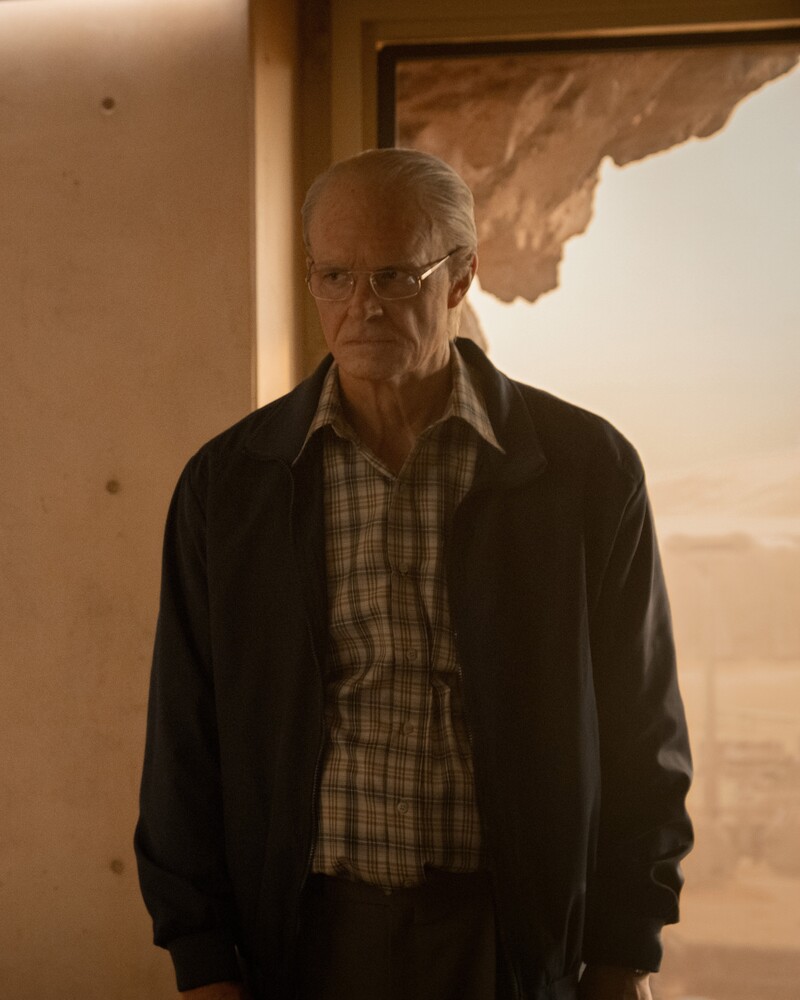
- It seems a character with cancer was all it took for Joel Kinnaman to convincingly play an old man, because I didn’t buy the Season 4 performance at all.
- Seeing Alex try to experience Earth’s free pleasures through VR reminds me to appreciate life more.

Now’s your turn, For All Mankind fanatics. What did you think of the season premiere? Who are you siding with in all these conflicts?
Let’s keep the conversation going — it’s the only way the good stuff survives.
Say something in the comments, share if you’re moved to, and keep reading. Independent voices need readers like you.
-
For All Mankind Season 5 Episode 1 sets up an interplanetary war as tensions between Earth and Mars reach fever-pitch levels. Our review!
-
Monarch: Legacy of Monsters Season 2 Episode 5 delivers a devastating blow. Let’s discuss all the developments inside!
-
On Shrinking Season 3 Episode 9, “Daddy Issues,” Jimmy gets ambushed while Gaby moves forward. We review it all, plus Brian’s TED Talk!
-
Monarch: Legacy of Monsters Season 2 Episode 4 switches things up again as Hiroshi learns a bombshell from the past. Let’s discuss!
-
On Shrinking Season 3 Episode 8 “Depression Diet” everyone takes a breath as moving on proves exhausting. But Horny Derek is 🤣. Our review!




Read the original article here