


A pharmacist holds boxs of Eli Lilly & Co. Mounjaro brand tirzepatide medication arranged at a pharmacy in Provo, Utah, US, on Monday, Nov. 27, 2023.ÂÂÂ
George Frey | Bloomberg | Getty Images
Skyrocketing demand for a class of weight loss and diabetes treatments has lifted Eli Lilly to new heights over the last year. But the drugmaker has much more work it wants to do with that hard-won success, outgoing Chief Financial Officer Anat Ashkenazi told CNBC.ÂÂÂ
Ashkenazi, who will step in as the new CFO of Alphabet on July 31, has been key to managing the windfall in revenue and wave of investor optimism from Eli Lilly’s diabetes injection Mounjaro and recently launched obesity drug Zepbound. Ashkenazi took over as CFO at Eli Lilly in 2021 after roughly two decades with the pharmaceutical giant. She was included on CNBC’s inaugural Changemakers list earlier this year.
“You have to be a really good student of the business and understand it inside and out and understand the industry,” she told CNBC in an interview before her departure announcement. “Only when we understand the full system, can we navigate it well so that we bring value to it…That’s my role as CFO.”
Her tenure hasn’t come without challenges: Eli Lilly and rival Novo Nordisk have both struggled to manufacture enough supply of their treatments to meet unprecedented demand, causing nationwide shortages of those drugs.ÂÂÂ
Their weekly injections are part of a class of drugs called GLP-1 agonists, which mimic certain hormones produced in the gut to suppress a person’s appetite and regulate their blood sugar. Some analysts expect the market for those drugs to be worth $100 billion by the end of the decade.ÂÂÂ
Eli Lilly’s boom in revenue has allowed the company to invest heavily to scale up manufacturing, which will eventually get more medicine into patients’ hands, Ashkenazi said.ÂÂÂ
“As we start selling product and we get the revenue in and cash flow associated with that sale,” the company wants to “funnel that cash flow back to the business to invest in those manufacturing facilities,” she said.ÂÂÂ
Eli Lilly does not expect to match the pace of demand this year and maybe not even in 2025, Ashkenazi said at a conference in March. But the pharmaceutical giant has made encouraging progress so far.ÂÂÂ
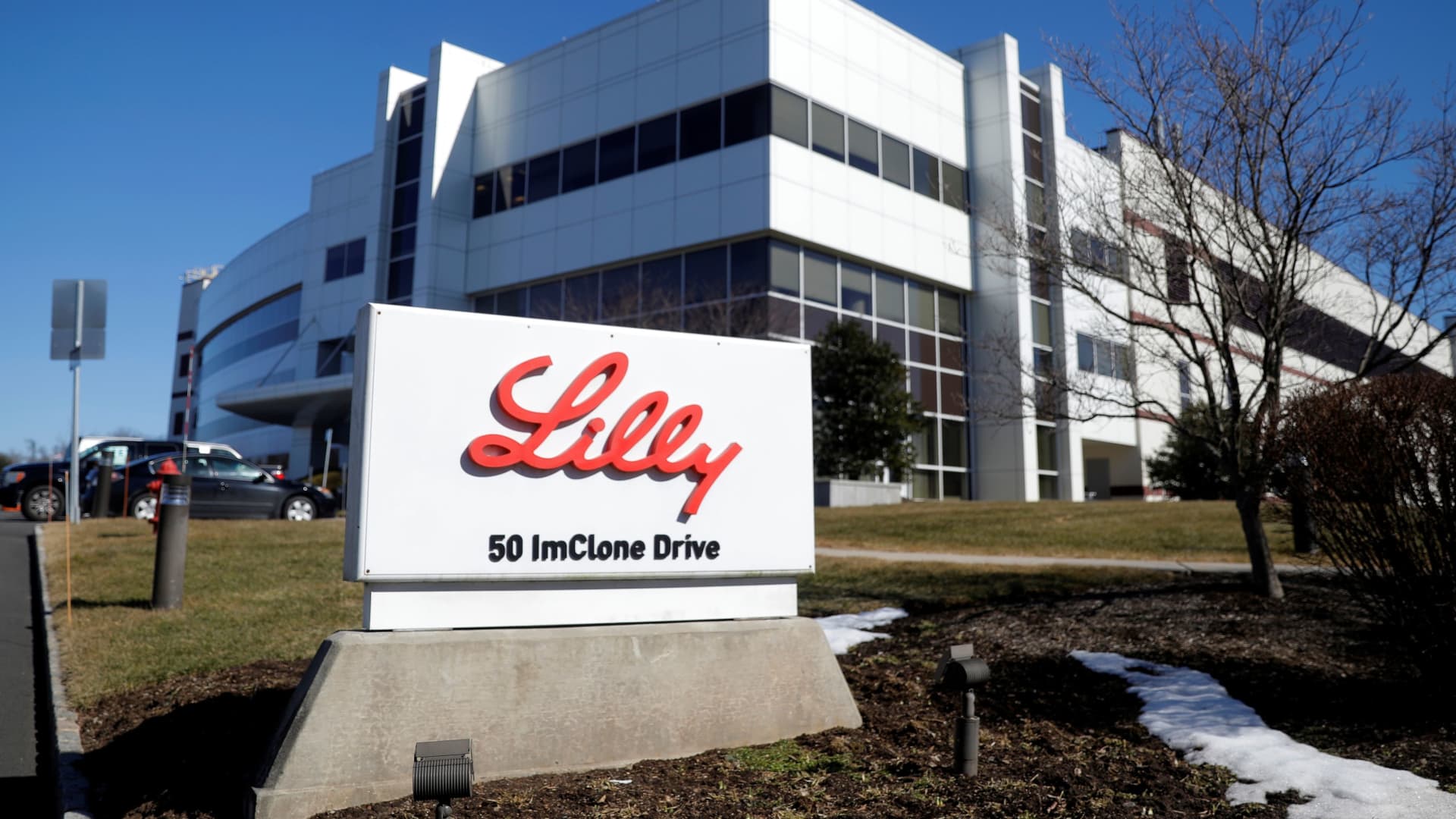
An Eli Lilly and Company pharmaceutical manufacturing plant is pictured in Branchburg, New Jersey, on March 5, 2021.
Mike Segar | Reuters
Ashkenazi said Eli Lilly has several manufacturing sites either under construction or “ramping up,” including two locations in North Carolina, two in Indiana, one in Ireland and one in Germany, along with a seventh site the company recently acquired from Nexus Pharmaceuticals. Eli Lilly late last month also said it would invest another $5.3 billion in its manufacturing plant in Lebanon, Indiana.ÂÂÂ
Those facilities add to the company’s “existing, very large” manufacturing footprint across the U.S. and Europe, Ashkenazi said. Since 2020, Eli Lilly has spent more than $18 billion to build, expand and purchase manufacturing plants in those regions, the company said in May.
Ashkenazi noted that Eli Lilly is also tackling another barrier to patient access: limited insurance coverage for weight loss drugs in the U.S.ÂÂÂ
Some employers and other health plans are still reluctant to cover GLP-1s for weight loss due to their hefty price tags, which they say could significantly strain their budgets. Insurers also have other questions, such as how long patients actually stay on the treatments.ÂÂÂ
Still, Ashkenazi said coverage of Zepbound by U.S. commercial insurers is improving, with about 67% commercial coverage as of April 1. Eli Lilly is working to build that access for the remainder of the patients, she noted.ÂÂÂ
“It’s not enough to have a highly efficacious, safe drug that can truly change people’s healthcare â€Â“ but also make it accessible,” Ashkenazi said.ÂÂÂ
She also hopes that patients enrolled in the federal Medicare program will eventually see increased coverage for weight loss drugs as Eli Lilly and other drugmakers demonstrate their ability to treat a wide range of obesity-related conditions.ÂÂÂ
Eli Lilly is studying tirzepatide, the active ingredient in Zepbound and Mounjaro, in patients with obesity and fatty liver disease, obstructive sleep apnea, chronic kidney disease and heart failure, among other health conditions.ÂÂÂ
Under new guidance issued in March, Medicare Part D plans can cover obesity treatments that receive regulatory approval for an additional health benefit. Medicare prescription drug plans administered by private insurers, known as Part D, currently cannot cover those drugs for weight loss alone.
A bigger issue at hand is a long-held misconception that obesity is a “lifestyle choice” rather than a chronic disease, according to Ashkenazi.
Eli Lilly is trying to change that.ÂÂÂ
“Our goal is to ensure that society, the health-care system and patients themselves actually view this and understand that it is a chronic disease…and therefore should be treated as such,” Ashkenazi said.ÂÂÂ
Read the original article here